

A work by Nikos Katris
KALLISTI
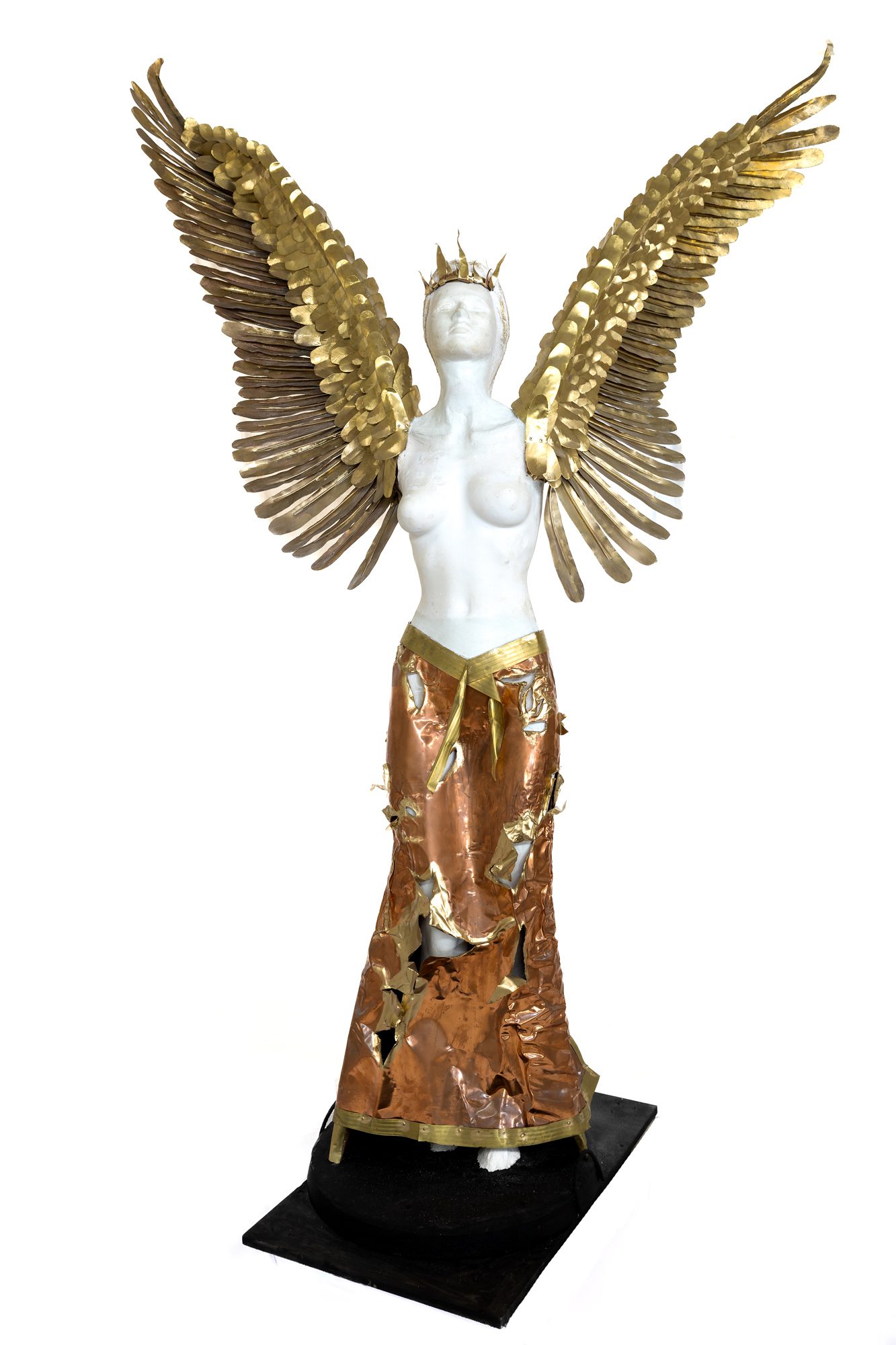
The sculpture symbolizes the birth of Kallisti, which resulted from the great Minoan eruption of the volcano. This led to the destruction of the prehistoric civilization, radically altering and shaping the appearance of the island to what we now recognize as the caldera of Santorini.
The work Kallisti represents this transitional period that took place on our island, where Kallisti is propelled, winged, fiery, and burning, from the volcano’s crater.
The sculpture captures the concept of transcending oneself, of elevating towards the ideals of beauty, harmony, and creation from chaos, and of transformation. Her wings, strong and resilient, rise as a symbol of freedom and transcendence. In this way, it marks the rebirth and prosperity of our island.
THE MYTH
Santorini and the myth of the abduction of Europa by Zeus.
The name Kallisti was given by Cadmus, the grandson of Poseidon, when during his search for his sister Europa, he made a stop at this island, leaving officials to colonize it with the intention of returning and making it his kingdom.
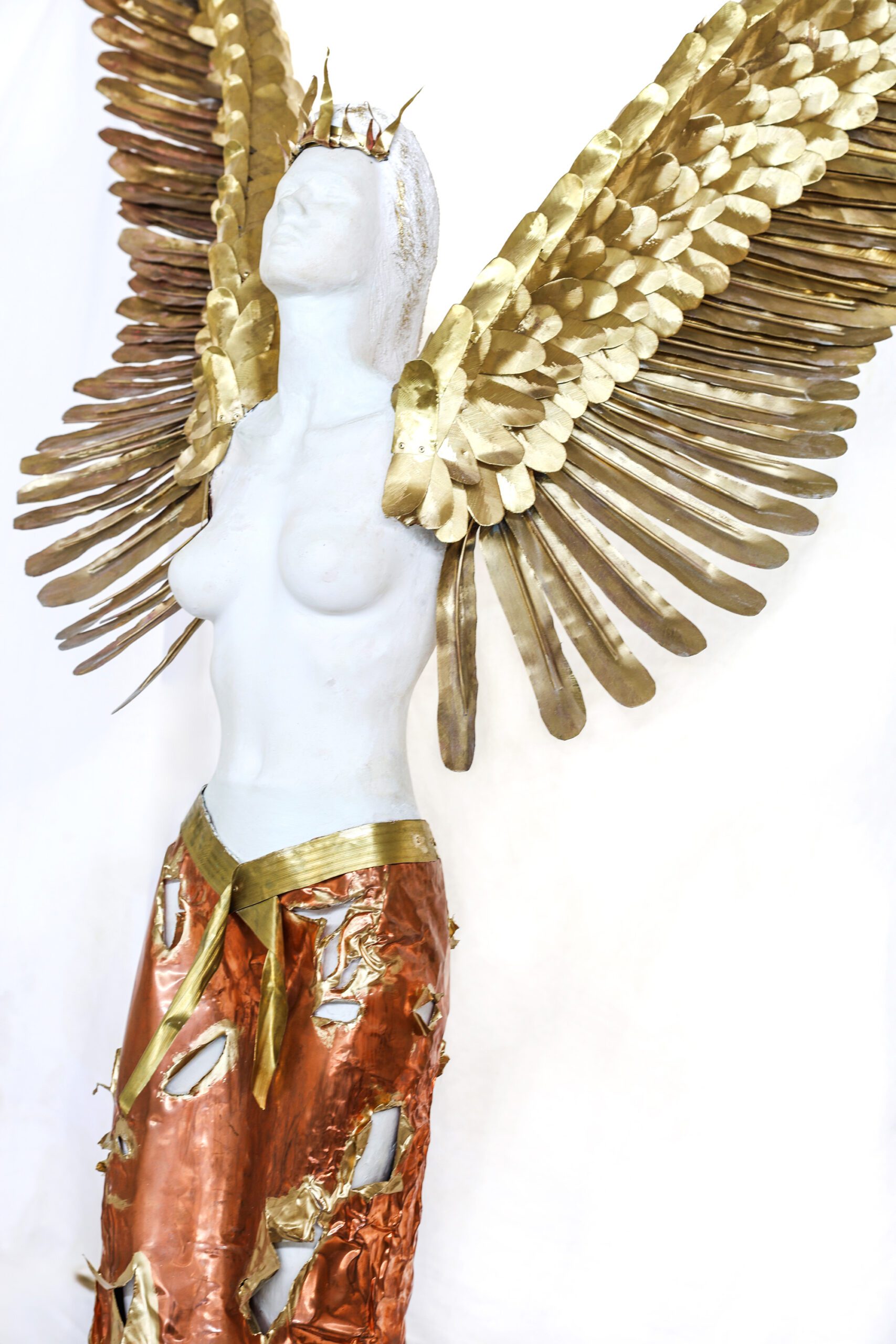
The sculpture “Kallisti” by Nikos Katris stands as one of the most potent symbols of modern Santorinian art. This masterpiece is inextricably linked to the cataclysmic Minoan eruption—an event that decimated an entire civilization while simultaneously birthing the breathtaking beauty of the Caldera we admire today. “Kallisti” is not merely a statue; it is the physical embodiment of this transitional era, where total destruction is transmuted into sublime creation.
The figure of Kallisti is portrayed as winged, fiery, and burning, as if propelled directly from the volcano’s crater. Nikos Katris has masterfully captured the raw dynamics of the eruption, granting it a human-centric dimension. Her wings, strong and resilient, rise as symbols of freedom and transcendence. The work speaks to the concept of elevating oneself toward the ideals of beauty and harmony, even when these emerge from absolute chaos. It serves as a poignant reminder that life always finds a way to triumph over adversity.
“Kallisti” is not merely a statue; it is the physical embodiment of this transitional era, where total destruction is transmuted into sublime creation.
Displayed prominently at The Cave Art Gallery, “Kallisti” invites the viewer to reflect on their own internal “eruptions” and their capacity for personal rebirth. The use of local volcanic materials makes the sculpture feel like an organic extension of the island itself. For the art collector or the traveler, “Kalliste” represents the true essence of Santorini: a beauty forged in fire and loss, ultimately resulting in an eternal triumph of spirit and aesthetics over the forces of nature.
Beyond the symbolism of rebirth, the work is deeply rooted in Greek mythology. The name “Kallisti” (the Fairest One) was given to the island by Cadmus, the grandson of Poseidon. According to legend, while searching for his sister Europa—who had been abducted by Zeus—Cadmus made a stop at Santorini. Enchanted by its beauty, he left officials behind to colonize the island. Katris utilizes this mythological background to imbue his sculpture with a timeless quality that bridges the present with a glorious past.